Find the Right Filter
Start with the information you already have to narrow the correct replacement.
How can I find a replacement filter by part number?
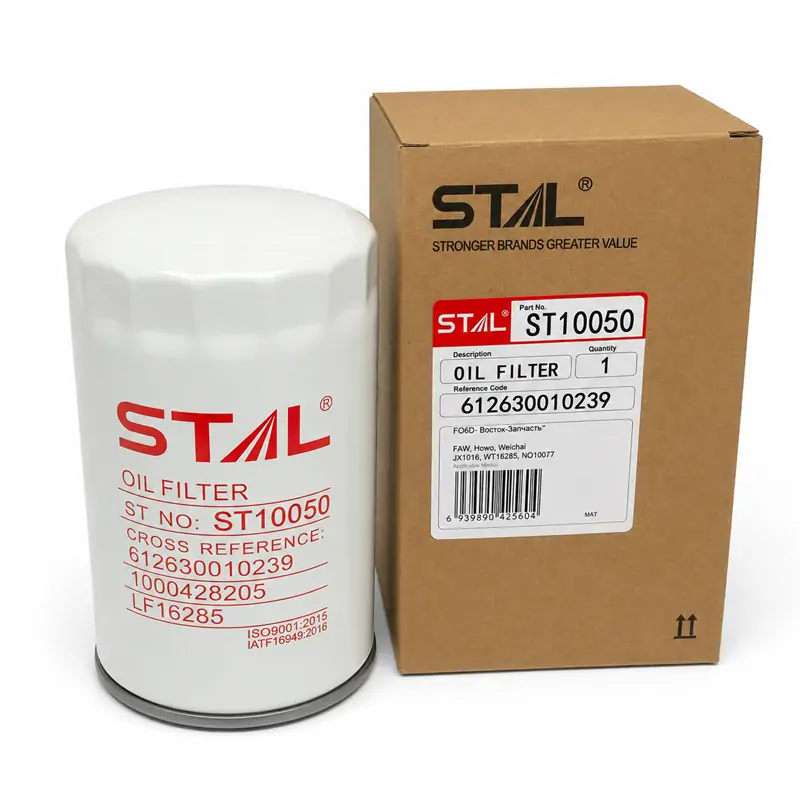
Start with the number printed on your current filter, its label, or the equipment parts list. Both OEM numbers and aftermarket numbers can be used for identification.
Once we have the number, we cross-reference it with our database — checking dimensions, application details, and compatibility — before proposing a replacement.
Note: A matching part number is a starting point, not a substitute for fitment verification. We always confirm the details with you before the order is placed.
Can you cross-reference Donaldson, Fleetguard, Baldwin, MANN-FILTER, Parker and WIX filter numbers?
Yes. We can cross-reference filter numbers from major brands including Donaldson, Fleetguard, Baldwin, MANN-FILTER, Parker, and WIX against OE numbers, dimensions, and known applications.
However, a cross-reference is a starting point — not a guarantee. Filter catalogs can contain superseded numbers, product-family variations, or region-specific updates, so we never treat a matching number as automatically interchangeable.
To ensure accuracy, please provide as much of the following as possible:
Brand name of the original filter
Complete part number
Application details (equipment model, engine model, or machine type)
The more information we have, the more carefully we can verify the match — and confirm the right replacement before you order.
I only have an OEM number. Can you identify a replacement?
Yes — an OEM number is a great starting point.
Send us the complete OEM number along with the machine, engine, or system where the filter is used. Here’s how we work through it:
Check the reference family — identify the filter series and product group
Compare specifications — match dimensions, thread size, sealing type, and flow direction
Verify application details — confirm compatibility with your specific equipment
Tip: If the OEM number has multiple versions, or if the equipment information is incomplete, a photo or dimensions of the original filter can help us narrow down the right match quickly.
The more details you provide, the faster and more accurately we can identify the right replacement — and confirm it with you before the order is placed.
Can you identify a filter from photos?
Yes — when the part number is missing or unreadable, photos are one of the most effective ways to start identification.
For the best results, please send clear images of:
The complete filter — front and back
Top and bottom views — showing thread or opening details
The label — even if partially faded
Seals and gaskets — close-up if possible
Any unusual construction details — baffles, valves, or unique shapes
Tip: Place a ruler or measuring tape beside the filter when possible. Photos combined with dimensions and machine or engine information give us the strongest basis for an accurate match.
Once we have the images, we’ll cross-reference the visual details with our database and confirm the right replacement with you — before the order is placed.
Can you identify a filter from dimensions?
Yes — dimensions are a reliable way to narrow down filter options, especially for cartridge elements and filters with missing or unreadable labels.
For the best results, please provide the following measurements:
Outside Diameter (OD)
Inside Diameter (ID)
Overall Height
Thread Size
Gasket / Seal Dimensions
Along with measurements, it also helps to describe the filter construction (e.g., cartridge, spin-on, panel) and the application (equipment model, engine type, or machine system).
Note: Dimensions alone may not confirm media type, micron rating, or operating pressure requirements. That’s why we always combine dimensional data with application details and cross-reference checks — and confirm the right match with you before the order is placed?
What information should I send for the fastest filter match?
The more verified information you provide upfront, the faster we can identify the right replacement — and the fewer questions we need to ask along the way.
Here’s a quick checklist of what helps us most:
Current part number & brand — OEM, aftermarket, or any number printed on the filter
Machine or engine model — equipment type, brand, and model year if available
Clear photos — of the filter, label, top and bottom views
Key dimensions — OD, ID, overall height, and thread size
Quantity & destination country — so we can check stock and shipping options right away
Tip: You don’t need to have everything on this list. Send whatever you have, and we’ll work with it. But the more details you provide, the faster and more accurately we can match the right filter — and confirm it with you before the order is placed.
- Current part number and brand
- Machine or engine model
- Clear photos of the filter, label, top and bottom
- OD, ID, overall height and thread size
- Required quantity and destination country
Cross Reference & Fitment
Compare reference numbers with dimensions, fitment and the real application.
What does a filter cross-reference number mean?
A cross-reference connects an OE or aftermarket part number to an equivalent or related replacement — essentially telling you which filters from different brands share the same specifications.
It’s a powerful tool for finding alternatives, but it’s not a shortcut. A cross-reference match should always be verified against:
Application details — equipment model, engine type, and operating conditions
Dimensions — OD, ID, height, and thread size
Seal and gasket configuration — shape, material, and placement
Filtration requirements — media type, micron rating, and flow direction
Note: Cross-reference data can also include superseded numbers — older part numbers that have been replaced by updated versions. These need additional confirmation to ensure the replacement fits your specific application.
That’s why we never rely on a cross-reference alone. We combine it with dimensional checks, application verification, and your input — then confirm the right match with you before the order is placed.
Does a cross-reference mean two filters are physically identical?
Not always. Two filters may share the same cross-reference and serve the same application — but still differ in important ways:
End-cap design — shape, material, or mounting method
Seal configuration — gasket type, size, or placement
Bypass valve settings — pressure threshold and activation point
Media construction — filtration material, pleat count, or micron rating
Measurement points — where OD, ID, or height is measured
These differences may seem minor, but they can affect installation fit and system performance.
Note: That’s why we never rely on a cross-reference alone. We compare the specifications that matter for your specific equipment — and confirm the right match with you before the order is placed.
Why can equivalent filters have slightly different dimensions?
Because not all dimensions are measured the same way. Different manufacturers may take measurements from different reference points — such as the filter body, the sealing surface, or the end cap — which can result in slightly different listed values even for filters that serve the same application.
Other factors that contribute to dimensional differences include:
Gasket compression — the listed dimension may or may not account for gasket compression under installation torque
Production tolerances — small variations are normal within manufacturing specifications
Construction differences — end-cap thickness, pleat depth, or housing design can vary between brands
Note: Small dimensional differences may be acceptable in some applications, but mounting clearance and sealing geometry should always be verified before installation.
That’s why we never rely on catalog dimensions alone. We cross-check measurements against your specific equipment — and confirm the right match with you before the order is placed.
Can two filters with the same dimensions have different filtration ratings?
Yes. External size does not confirm media type, micron rating, efficiency, dirt-holding capacity or pressure capability. Two filters can fit the same space while being designed for different fluids or operating conditions. When these specifications are important, include the original number and application so they can be reviewed together.
Should I match a filter by machine model or part number?
A verified part number is the most precise starting point — because a single machine model can use different filters depending on:
Serial number range — early vs. late production units may require different parts
Engine option — the same model with different engine configurations may need different filters
Production year — mid-cycle design changes can alter filter specifications
That said, machine and engine information remains valuable as a secondary check. It helps us verify that the part number matches your specific application — not just the general model family.
Best practice: Send both whenever possible — the part number for precision, and the machine/engine details for verification. The more context we have, the faster and more accurately we can confirm the right replacement — and get your confirmation before the order is placed.
Can you check an obsolete or superseded filter part number?
Yes — we regularly help customers find replacements for filters that have been discontinued, superseded, or reassigned to a new part number.
Here’s how we approach it:
Trace the number history — identify whether the original number has been replaced, merged, or retired
Cross-reference with available data — match against current product families, dimensions, and application records
Verify suitability — confirm the proposed replacement fits your specific equipment and operating requirements
To get started, please send us:
Complete original part number and brand
Machine or engine information (model, serial range, production year)
Photos or dimensions of the original filter, if available
Note: Availability and suitability of the proposed replacement are confirmed during the quotation stage — we’ll always check with you before the order is placed.
Cross-Reference Note
Cross-reference information supports product identification. Final selection should consider the original part number, dimensions, application and required filtration specification.
Filter Specifications
Review the measurements and performance details that affect selection.
What do OD, ID and overall height mean?
These are the three key measurements used to identify and verify filter fit:
OD (Outside Diameter) — the diameter of the filter body or element, measured across the widest point of the outer surface
ID (Inside Diameter) — the diameter of the central opening, where applicable (e.g., cartridge elements or spin-on filters with an inner core)
Overall Height — the total length from the lowest to the highest point, including end caps when they are part of the installed size
Important: Always state where you measured — for example, body OD vs. seal OD, or height with vs. without gasket compression. Seals, end caps, and protrusions can affect the result, and different manufacturers may measure from different reference points.
When sending dimensions, a quick note like “OD measured at body, height includes end caps” helps us match the right filter faster — and avoids confusion when comparing against catalog data.
What does thread size mean on a spin-on filter?
Thread size refers to the mounting thread that connects the filter to its head — defined by diameter and pitch, using metric, UNF, or other standards.
A filter with the wrong thread may look similar but won’t mount or seal correctly. That’s why we always check thread specs alongside gasket dimensions to ensure a proper fit.
What does micron rating mean, and how do nominal and absolute ratings differ?
Micron rating describes the particle size a filter is designed to capture — but the number alone doesn’t tell the full story. The test method and efficiency percentage behind it matter just as much.
Nominal rating — the filter removes a percentage of particles at the stated size (e.g., 85–95%)
Absolute rating — the filter captures nearly all particles at the stated size (typically ≥99.9%)
Note: Nominal and absolute ratings are not directly comparable without the manufacturer’s test data and efficiency definition. A “10 micron nominal” filter is not the same as a “10 micron absolute” filter.
How do primary and secondary fuel filters differ from a fuel / water separator?
Each plays a distinct role in the fuel system:
Primary filter — removes larger particles and water early in the system, protecting the fuel pump
Secondary filter — provides finer filtration (typically 4–10 microns) before fuel reaches sensitive components like injectors
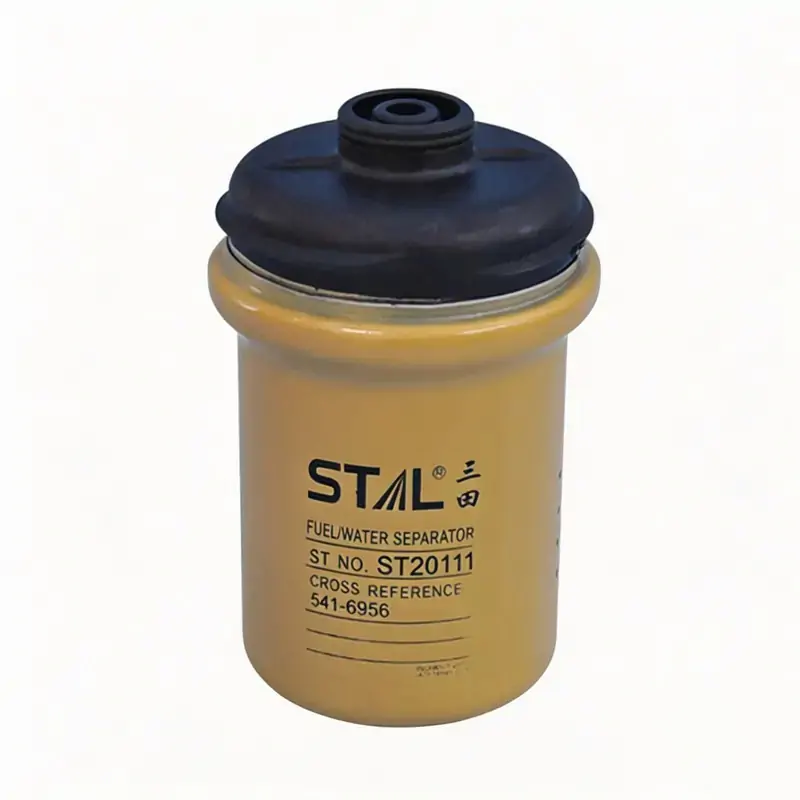
Fuel / water separator — specifically designed to remove free water from fuel, often integrated into the primary filter stage
Note: Some assemblies combine these functions into a single unit. Always check the original system layout and part reference to confirm which role each filter serves.
What is the difference between hydraulic suction, return and pressure filters?
Each serves a different position and purpose in the hydraulic system:
Suction filter — installed at the pump inlet; coarse filtration (typically 80–200μm) with low flow resistance to protect the pump from large particles
Return filter — installed before oil returns to the reservoir; medium filtration (typically 10–25μm) to capture wear debris and keep the tank clean
Pressure filter — installed downstream of the pump on the high-pressure line; fine filtration (typically 3–10μm) to protect sensitive components like servo and proportional valves
Note: These filters operate under very different pressure conditions and require specific housing and element ratings. Never substitute one for another based on similar dimensions alone — always verify the application, pressure rating, and filtration requirements.
What is the difference between a spin-on filter and a cartridge filter element?
Spin-on filter — the filter media and outer canister are one sealed unit; the entire filter is replaced at service
Cartridge element — only the inner element is replaced; the housing stays on the machine and is reused
Because of this, they require different measurements for identification:
Spin-on — thread size and gasket diameter
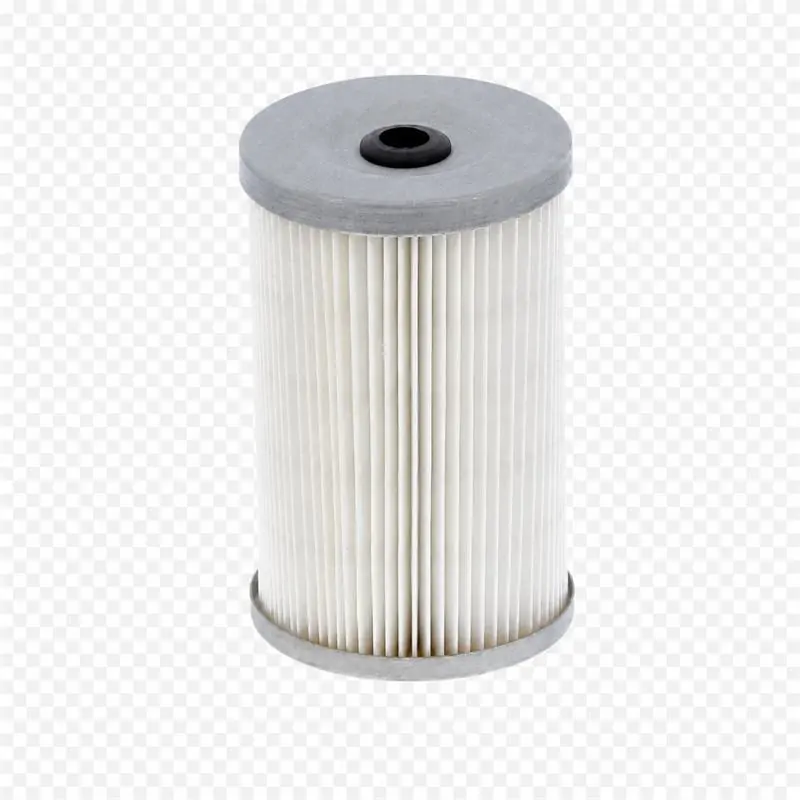
Cartridge — OD, ID, height, and end-cap type
Note: Never match a cartridge element to a spin-on filter (or vice versa) based on similar dimensions alone — the mounting method and sealing design are fundamentally different.
Quotes, MOQ & Payment
Prepare clear RFQs and confirm commercial terms for B2B orders.
How do I request a quotation?
Use our contact page or homepage inquiry form and include:
Part numbers and brand
Quantity and destination country
Machine or engine application (if available)
Special specifications (if applicable)
The more detail you provide, the faster and more accurately we can check availability and prepare a quotation based on actual product and order conditions.
What information should I include in my RFQ?
Essential details:
Complete part number and brand
Quantity and destination country
Required delivery time
Add when helpful:
Machine or engine application
Photos or dimensions
Media / micron requirements
Tip: For multi-item inquiries, list one line per part number — it’s the clearest format and helps us process your request faster.
What is your MOQ?
MOQ varies by product type, stock status, packaging, and production requirements. Stocked items may have different conditions from made-to-order or private-label products.
Tip: Include your required quantities with your inqui !– /wp:details –>
Can I send an Excel filter list with many part numbers for quotation?
Yes — spreadsheets are welcome, especially for distributors, repair shops, and fleet buyers.
Recommended columns:
Part number
Brand
Quantity
Notes / application
Tip: Keep one item per row, and clearly flag any uncertain references so we can verify them separately before quoting.
Can different filter models be combined in one inquiry?
Yes. Fuel, lube oil, hydraulic, and other filter types can all be included in a single inquiry.
Grouping them together helps us review availability, packaging, and shipment planning in one go. Just make sure each model has its own:
- Part number
- Quantity
- Application notes
Can I order samples before a bulk order?
Yes. Sample availability depends on product type, stock status, quantity, and destination.
Pricing, freight, and any minimum conditions will be confirmed during quotation.
Tip: Samples are useful for product review — but always verify application and specification compatibility before placing a bulk order.
Can you provide a proforma invoice for international orders?
Yes. A proforma invoice is prepared once the following are confirmed:
Products and quantities
Prices and payment terms
Shipping basis (Incoterms)
Note: The exact commercial terms and document validity period will be stated with the quotation or order confirmation.
Production & Custom Filters
Understand stock, production and private-label requirements before ordering.
Are all filters kept in stock?
Not all references are kept in stock. We normally keep 1,000,000+pcs hot items in stock. Availability depends on the product, current inventory, and purchasing demand.
Tip: Send the part number and quantity — we’ll check stock, replenishment, or production options and provide a delivery estimate.
Can filters that are not in stock be produced to order?
Yes, some references can be arranged through production or sourcing, depending on product type, technical specifications, and quantity.
Feasibility, MOQ, and lead time are confirmed case by case.
Note: For less common items, a sample, drawing, or verified reference may be required to ensure accuracy.
Do you support private label or customized packaging?
Yes. Private-label and custom packaging options are available depending on quantity and product type.
Please provide:
- Target brand / artwork
- Packaging format
- Expected quantity
- Market requirements
Note: Final feasibility, artwork specs, and production conditions will be confirmed during quotation.
What information is needed for a custom filter request?
Please provide as much of the following as possible:
Original sample or drawing with complete dimensions
- Media and micron rating
- Fluid type and application
- Operating conditions (if relevant)
- Expected quantity
Note: Changing the filtration rating requires technical confirmation before production. Not every sample can be reproduced — feasibility is reviewed before any commitment is made.
Can certificates, specifications or test information be provided?
Available documents vary by product, manufacturer, and order requirements.
Tip: Let us know which certificates, specifications, or test reports you need before ordering — we’ll check feasibility and confirm availability during quotation.
Note: Document availability should not be assumed for every product.
Shipping & Delivery
Plan international delivery, freight and combined shipments.
Do you ship internationally, and what shipping methods are available?
Yes. Depending on shipment size, urgency, and destination, we can arrange:
Courier(DHL丨UPS丨FEDEX丨EMS…)
Air freight
Sea freight
Buyer-appointed freight forwarder
Note: The best shipping method is confirmed with the quotation or order details — not applied as a one-size-fits-all rule.
How is shipping cost calculated?
Freight cost depends on destination, packed weight, volume, shipping method, and any special handling requirements.
Note: Product price and international freight may be quoted separately. Please provide a complete item list and destination details so we can prepare an accurate freight estimate.
How long does delivery take, and can products be combined?
Delivery time = preparation/production time + international transit time, both varying by availability, quantity, destination, and shipping method.
Note: Multiple products can often be consolidated into one shipment for B2B orders — but timing and freight efficiency are confirmed against the full order list.
Are freight, import duties and taxes included in the quoted price?
Unless stated otherwise, product price, freight, import duties, and local taxes are quoted separately.
Note: The shipping basis (Incoterms), destination, and included charges are confirmed during quotation — so you can clearly review any costs payable locally.
Returns, Warranty & Support
Use order evidence to resolve damage, mismatch and after-sales questions.
What should I check when I receive my filters?
Before putting the products into service, please verify:
Part numbers and quantities
Packaging and visible condition
Major dimensions, thread, and seals (where fitment is critical)
Tip: Keep all labels and packing information until the order has been fully checked.
What should I do if I receive a damaged product?
Document — Take clear photos of the product, outer carton, inner packaging, and shipping label. Retain all packaging.
Report — Contact the sales team promptly with your order number, part number, affected quantity, and a brief description.
Tip: Video evidence is welcome when it helps illustrate the issue. Claim handling depends on the evidence and shipment circumstances.
What should I do if the filter does not match my application?
Do not install or modify the filter. Please provide:
Order number and affected quantity
Ordered part number and original reference
Machine or engine information
Measurements and clear comparison photos
Note: This information allows us to re-check the application and the supplied item for after-sales support.